 11
11
Cars have always been a subject of great interest and debate. While many people in the real world are looking for tips for buying a car, the virtual racing world has its own heated discussions. The world of racing simulators is filled with thrilling choices, but one question dominates the conversation: What is the most realistic racing sim game? Whether you’re an arcade racing fan or a user of commercial-grade simulator setups, realism and immersion are what set the top titles apart.
Racing games began in the arcade with titles like Pole Position and OutRun in the late 1970s and early 1980s. These games introduced basic racing mechanics and laid the groundwork for modern simulators.
As technology advanced, simulators emerged with a focus on realism. By the 1990s, driving arcade cabinets incorporated force feedback and realistic steering setups. These paved the way for today’s high-end driving games, which feature authentic tire grip, GT physics, and immersive environments.
Arcade racing games like Mario Kart prioritize accessible, fast-paced thrills, where impossible stunts are part of the charm.
Simulator racing, on the other hand, demands precision and mirrors real car behavior. It authentically replicates lap times, throttle control, and even tire degradation, offering a dynamic, real-world motorsport feel that appeals to serious drivers.
When evaluating the best racing simulators, several features are essential for realism:
Top games like Assetto Corsa and iRacing simulate everything from tire grip to suspension travel, providing detailed feedback on how a car would respond in real life. The force feedback and vehicle weight response create unparalleled immersion.
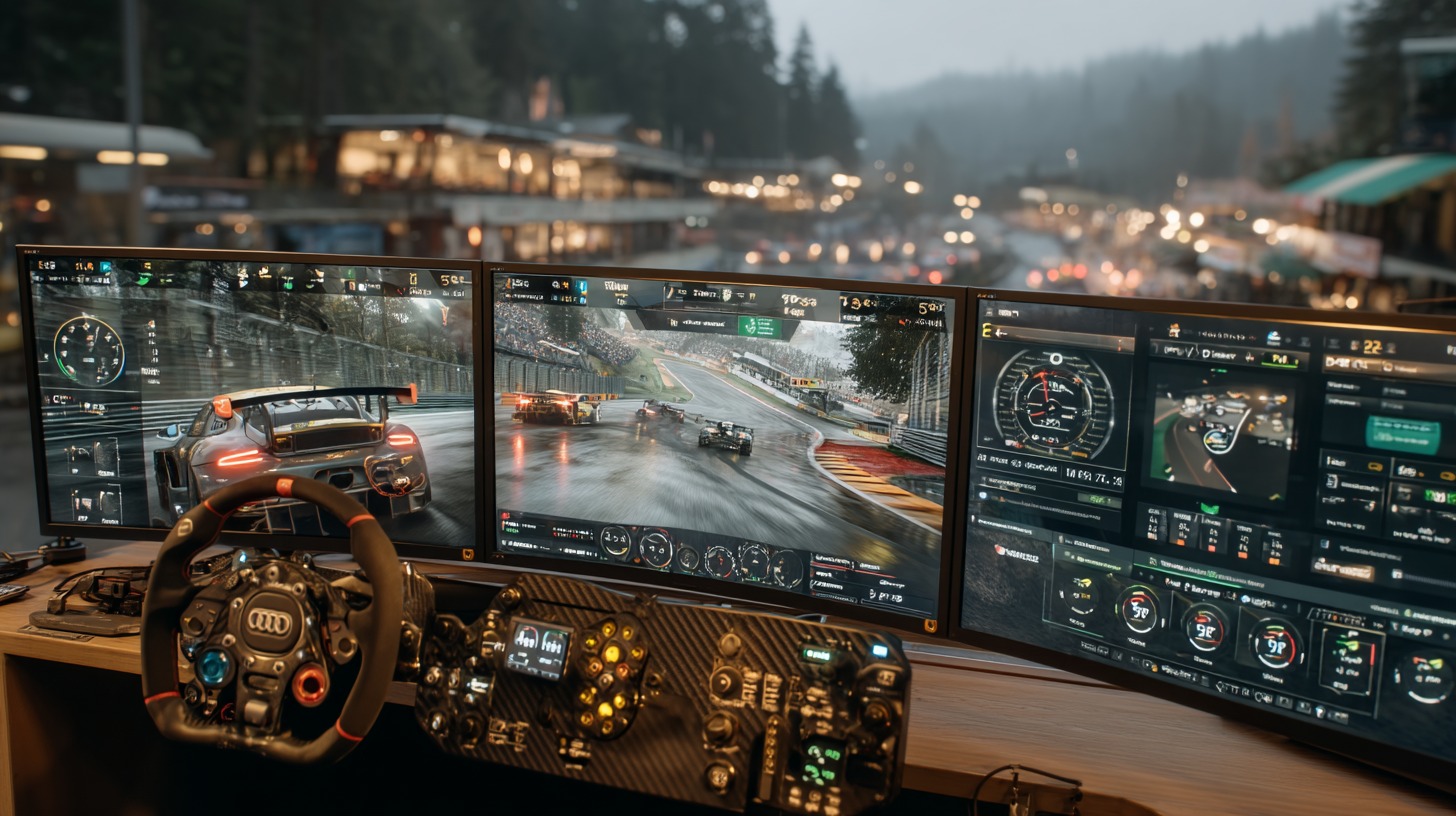
Leading sims offer advanced lighting, LCD dashboards, realistic track textures, and lifelike engine audio cues. You can even see rubber buildup on turns and feel vibrations through the steering wheel.
Serious sims allow players to customize every detail, from throttle sensitivity to brake balance. With commercial-grade rigs, including motion platforms and multi-screen builds, the realism can reach new heights.
Modern titles offer robust multiplayer support with ranked leagues and deep single-player career modes, providing a well-rounded experience for casual and competitive players.
Several titles have pushed the envelope in delivering a lifelike driving experience:
Known for its cutting-edge realism, iRacing simulates motorsport events with precision. Its subscription model supports continuous updates, real-world track scans, authentic tire models, and pro-level tournaments.
These sims offer incredible driving realism and mod support. With everything from GT racing to superbike mods, their authentic physics make them standouts.
With sophisticated weather systems and live track evolution, rFactor 2 is a favorite among sim purists. It’s praised for its responsive force feedback and immersive handling.
While titles like Project CARS and Forza Motorsport lean slightly more toward arcade-style racing, they still offer enough realism to satisfy many players.

To truly unlock a sim’s potential, your hardware is key. Consider:
These accessories bring you as close to a real car as possible.
While traditional arcade machines like Super Bikes 3 and Cruis’n Blast focus on casual fun, some newer cabinets are becoming hybrids, offering serious simulator features with authentic handling.
Realism can be expensive. A serious simulator rig can cost thousands, depending on the setup. High-end wheels, displays, and motion platforms add up. Still, for die-hard fans, the experience is worth every penny. Titles like Assetto Corsa and iRacing remain accessible, letting players start with a basic setup and upgrade over time.
The next generation of racing simulators will focus on even greater realism, including smarter AI opponents, advanced VR integration, and dynamic weather that alters grip levels. Whether you prefer the casual thrills of an arcade racer or the serious depth of a simulator, the line between arcade and authentic simulation continues to blur.